
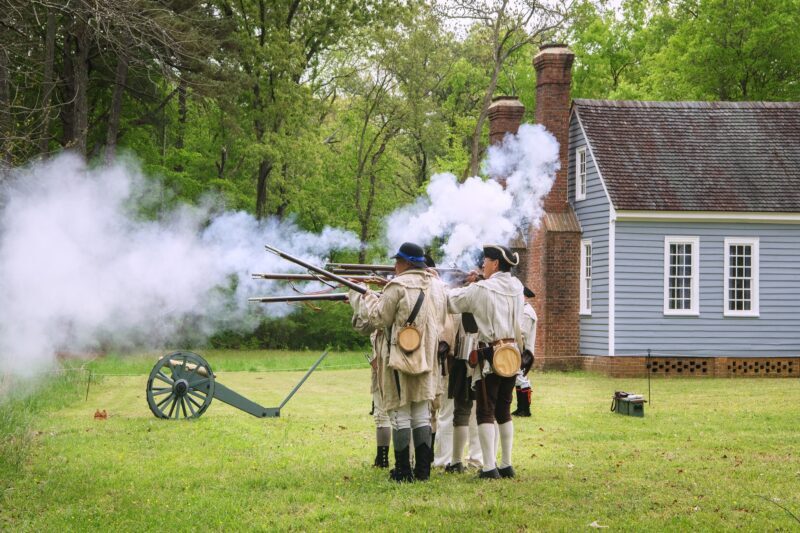
Where the Revolution still echoes
Four historic sites offer living history, battlefield walks, and stories that haven’t gone quiet. Get ready for a Revolutionary War experience you can feel, not just read about.
History here doesn’t stand behind glass. It drills across open fields, fires muskets at close range, and asks you to sign your name with a quill.
- Explore Halifax State Historic Site, where the Halifax Resolves marked the first colonial official call for independence.
- Experience the Museum of the Waxhaws living history weekend, featuring reenactors and the contested 1780 Battle of the Waxhaws.
- Walk Kings Mountain National Military Park, site of the decisive Patriot victory (October 7, 1780), with ranger tours and living demonstrations.
- Middleton Place confronts Arthur Middleton’s legacy, pairing a signer’s home with exhibits on enslavement, resistance, and the Conversations of Freedom.
- Do one thing: attend the Battle of the Waxhaws living history weekend for immersive encampments, a downtown march, and front-row battle sequences.
The Politcal Spark — Arrive & settle — Easy first stop
Walk the preserved colonial town where North Carolina first called for independence • Move between furnished buildings with costumed interpreters across the grounds
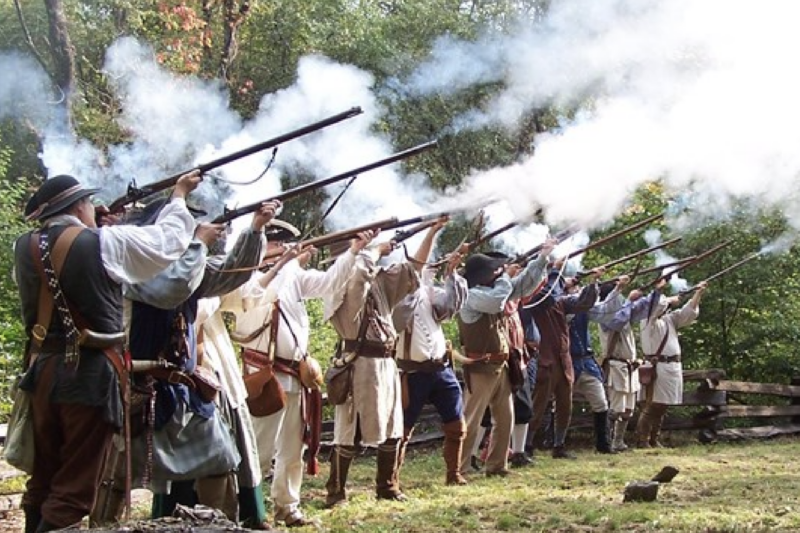
Halifax State Historic Site, Halifax, NC
Halifax sets the tone for the whole trip. This is where the Revolution began before the battles and before the Declaration. In April 1776, the Fourth Provincial Congress met here and adopted the Halifax Resolves, the first official action by any colony recommending independence from Britain. Standing in that context changes how the rest of the trip lands. T he site isn’t a single building. It’s a town you move through. The Owens House and Sally-Billy House show how domestic life ran alongside revolution. The Burgess Law Office puts you inside the legal world where these decisions were drafted. The Eagle Tavern and Clerk of Court’s Office fill in the social and civic fabric around them. Costumed interpreters don’t lecture — they inhabit the spaces and let you ask the questions. North Carolina commemorated America’s 250th anniversary here with the Prelude to Revolution event. While this year’s event has passed, April 12 marks Halifax Resolves Day and the site typically commemorates the day with a special event on the nearest weekend. This year, the Independence Day Celebration will be held on July 4, from 1 pm until 4pm.
Museum of the Waxhaws, Waxhaw, NC
The living history weekend (June 5–7, 2026) opens Friday evening with a march into downtown Waxhaw, then runs full days Saturday and Sunday on the museum grounds. Reenactors demonstrate camp life and military preparation between battle sequences. Visitors move freely through the encampments. The exhibit is built around the Battle of the Waxhaws in 1780, one of the bloodiest and most contested engagements of the Southern Campaign. Living historians engage directly with guests, offering context for the scenes unfolding around them. The experience is designed to be immersive and mobile, allowing visitors to shift between encampments, demonstrations, and battle sequences.
Kings Mountain National Military Park, Blacksburg, SC
Kings Mountain preserves the site of one of the most decisive Patriot victories of the Revolutionary War in the South. On October 7, 1780, Patriot militia defeated Loyalist troops here in a turning point for the Southern Campaign. Programming runs across the year — and the battlefield rewards a slow walk regardless of what’s scheduled. July 4 brings public readings of the Declaration and quill-and-ink signings. Anniversary Weekend (October 3–4, 2026) adds ranger tours, musket and rifle demonstrations, children’s activities, speaker presentations, and an evening lantern tour. October 7 itself is marked with a formal wreathlaying ceremony. Each program approaches the same battlefield from a different angle.
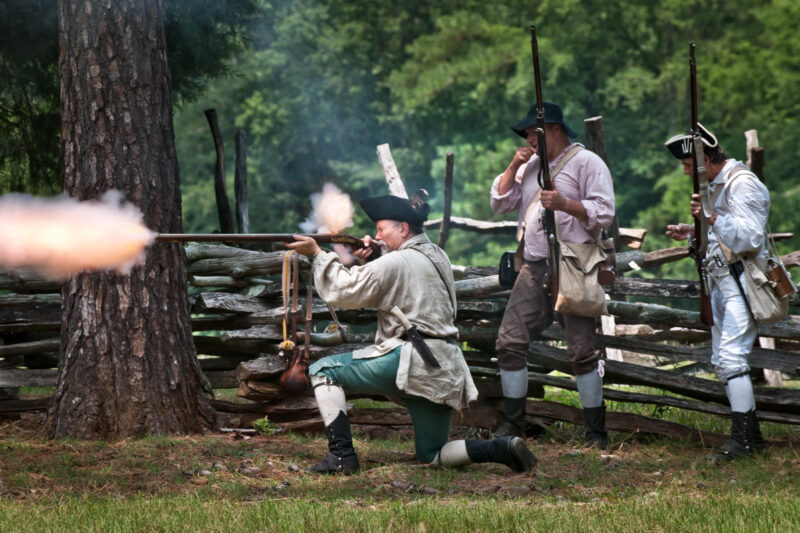
Middleton Place, Charleston, SC
Middleton Place is where the trip gets harder, and more honest. Arthur Middleton signed the Declaration at 34, was imprisoned after the fall of Charleston in 1780, and died here in 1787. His name appears on one of the most important documents in American history. His plantation ran on enslaved labor. Middleton Place doesn’t ask you to resolve that tension. It asks you to experience it through stories of brutality, resistance, skill, and survival. The Beyond the Fields: Enslavement at Middleton Place exhibit helps cultivate a deeper understanding of slavery and its lasting impacts. T he Conversations of Freedom exhibition in the South Flanker House Museum spans the Revolutionary period from 1770 to 1783 and looks at it from multiple directions: the Middleton family’s political commitments, 18th-century textiles, a rare silk edition of the Declaration, and the lives of the people who were enslaved here while liberty was being argued into existence. T he site is one of the few places in the United States where visitors can experience the birthplace, home, and surrounding landscape connected to a signer of the Declaration. That designation carries weight. So does everything the full story puts beside it.
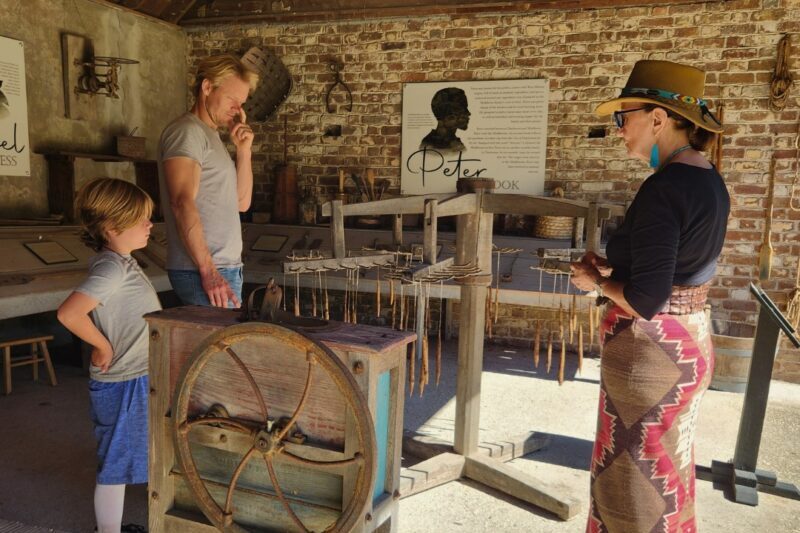
Experience history up close at Middleton Place
If You Do One Thing
Attend the Battle of the Waxhaws living history weekend at the Museum of the Waxhaws (June 6–7). Reenactors pull visitors directly into recreated military encampments, and the battle sequences make the chaos of backcountry war impossible to observe from a safe distance. The event opens Friday evening with a march into downtown Waxhaw and runs full days Saturday and Sunday. This is not a sit-and-watch experience. You’ll feel like you are part of the action!