Revolutionary War Sites In The Carolinas Every History Buff Should Visit
These are not just stories in books, they are real places where battles were fought, strategies unfolded, and independence was won.
Guilford Courthouse National Military Park — Greensboro, North Carolina
- Walk the battlefield trail at Cowpens National Battlefield; Daniel Morgan's staged retreat destroyed Banastre Tarleton's force and shifted momentum.
- Visit Kings Mountain National Military Park; October 1780 frontier militia routed Loyalists in a decisive, almost entirely American engagement.
- Ninety Six National Historic Site features the Star Fort, site of the 1775 land battle and the 1781 28-day siege, best-preserved earthwork.
- Historic Halifax State Historic Site where the 1776 Halifax Resolves called for North Carolina's independence; preserved colonial town, taverns, and programs.
A “victory” that cost Britain the war. In March 1781, Nathanael Greene’s army fought Cornwallis in a battle the British technically won — but at such devastating cost that it set Cornwallis on the road to Yorktown. Walk the battlefield trails, then head downtown to the 22-foot Nathanael Greene Monument.
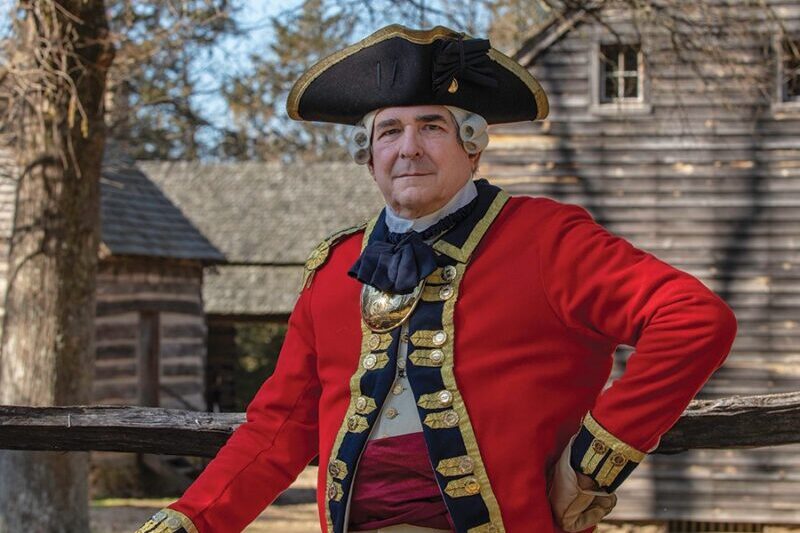
Experience the Revolution at Guilford Courthouse
Historic Halifax State Historic Site — Halifax, North Carolina
Where North Carolina first called for independence. In April 1776, the Halifax Resolves were adopted here — among the earliest official calls for independence from Great Britain. The preserved colonial town includes historic homes, taverns, and interpretive programs. Plan a full day.
Tryon Palace — New Bern, North Carolina
Colonial North Carolina’s seat of power — and a Patriot stronghold. Built 1767–1770 as the royal governor’s residence and capitol, Tryon Palace was seized by Patriots when Governor Martin fled in 1775. The first state governor was inaugurated here, and its lead roofing was melted into musket balls for the war effort. The reconstructed palace, 16 acres of formal gardens, and surrounding historic homes make this a half-day minimum.
Moore’s Creek National Battlefield — Currie, North Carolina
One of the earliest Patriot victories of the Revolution. In February 1776, Loyalist forces were swiftly defeated in an engagement that secured Patriot control of the Cape Fear region. The site is compact enough to explore fully in a morning or afternoon.
Brunswick Town / Fort Anderson State Historic Site – Winnabow, North Carolina
Where royal authority in colonial North Carolina was centered — and defied. Two royal governors resided here, making Brunswick Town the seat of executive power before the Revolution. In 1765, a mob of 500 colonists surrounded the governor’s house during the Stamp Act protests until British officials agreed not to enforce the act. When war came, residents abandoned the town and the British burned it. Visitors can walk the ruins of 65 colonial buildings, including the remaining brick walls of St. Philip’s Church.
Fort Johnston — Southport, North Carolina
The site of the first military action of the Revolution in North Carolina. In July 1775, over 500 Patriot militiamen burned this British fort to the ground. Before the attack, Royal Governor Josiah Martin had fled here after being driven from Tryon Palace, using it as his base before escaping to a British warship offshore. Only the officers’ quarters remain, now part of the Fort Johnston–Southport Museum.
Kings Mountain National Military Park — Blacksburg, South Carolina
One of the most consequential Patriot victories of the entire war. In October 1780, frontier militia surrounded and defeated Loyalist forces on a wooded ridge — a battle fought almost entirely by Americans against Americans. Allow at least a half day for the battlefield trail and visitor center.
Cowpens National Battlefield — Gaffney, South Carolina
The Southern Campaign’s most tactically brilliant engagement. Daniel Morgan’s layered strategy — using a staged retreat to lure the British into a trap — destroyed Banastre Tarleton’s force in 1781 and shifted momentum decisively toward the Patriots. A second day extends to Morgan Square in Spartanburg for broader campaign context.
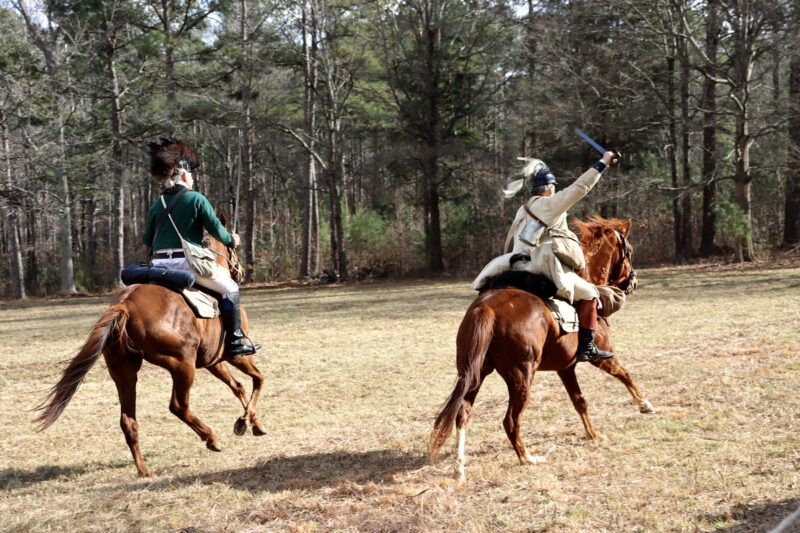
Cowpens National Battlefield
Historic Camden Revolutionary War Site — Camden, South Carolina
The British stronghold that anchored the Southern Campaign — and fell. Camden was the site of a devastating Patriot defeat in August 1780, but the British occupation that followed ultimately overextended Cornwallis’s forces. The 100+ acre living history park includes the reconstructed Kershaw–Cornwallis House (British headquarters), earthworks, and a visitor center. Guided and self-guided tours available.
Ninety Six National Historic Site – Ninety Six, South Carolina
Two Revolutionary War records in one place. The first land battle south of New England was fought here in November 1775, and the 28-day Patriot siege of 1781 stands as the longest of the entire war. The site’s Star Fort — a massive earthen star-shaped fortification — is the best-preserved Revolutionary War earthwork in the nation. A one-mile interpretive trail, visitor center, and reconstructed siege works make this a must for anyone tracing the Southern Campaign.
Fort Moultrie National Monument — Sullivan’s Island, South Carolina
Where palmetto logs stopped the British Navy. In June 1776, William Moultrie’s forces defended Charleston Harbor from a naval assault using a fort built from palmetto logs that absorbed cannon fire the British expected to destroy. A striking final destination where the Revolution’s opening battles meet the sea.
IF YOU DO ONE THING
Walk the battlefield trail at Cowpens National Battlefield, South Carolina In 1781, Daniel Morgan used one of the most brilliant tactical maneuvers of the entire war, a staged retreat that drew the British into a killing ground and destroyed Tarleton’s force. The trail is short, the exhibits excellent, and the ground still holds the shape of what happened
Getting There
Most sites cluster within 2–3 hours of Charlotte, Greensboro, or Raleigh.
Charlotte, NC: 30 min to Kings Mountain & Cowpens. 1 hr to Camden.
Greensboro, NC: Home of Guilford Courthouse. 1.5 hrs to Halifax, 2 hrs to Kings Mountain.
Raleigh, NC: 1.5 hrs to Halifax & New Bern. Day trip to Moore’s Creek & Fort Johnston.
Columbia, SC: 30 min to Camden. 1 hr to Cowpens, 2.5 hrs to Fort Moultrie.
Charleston, SC: Gateway to Fort Moultrie on Sullivan’s Island. 2 hrs to Camden.
Greenville, SC: 45 min to Cowpens & Kings Mountain.