The Carolinians Who Shaped The Revolutionary War
The Carolina Revolution was fought by commanders, free Black soldiers, women who acted when it mattered, and Native nations who paid an enormous price.
Commanders and frontier fighters, free Black soldiers, women who rode through the night, and Native nations who rebuilt after devastation — meet the people whose names belong in the Carolina Revolution story.
- Francis Marion (Swamp Fox) used guerrilla warfare from swamp bases to disrupt British supply lines and sustain Patriot resistance.
- Daniel Morgan executed a brilliant double envelopment at Cowpens, destroying Tarleton's force and shifting momentum in the Southern Campaign.
- Nathanael Greene used strategy and endurance; his "victory in defeat" at Guilford Courthouse weakened Cornwallis, setting the stage for Yorktown.
Who actually fought this war
The American Revolution in the Carolinas was not fought by a single type of hero. It was shaped by battlefield commanders and frontier fighters, by free and enslaved Black soldiers, by Native nations weighing impossible choices, and women whose courage kept things moving when the formal armies could not. T heir stories stretch across swamps, backcountry roads, coastal forts, and small towns that still remember them today. Many are marked by statues and museums. Others are only now being recovered. All of them are worth finding.
In the Carolinas, the Revolution was fought by many people across many landscapes. Their actions, large and small, helped shape the path to American independence.
Commanders & Fighters
Francis Marion • Fighter • Charleston Museum • Statue in Johnsonville, SC 7 • SC Military Museum
The “Swamp Fox” became famous for guerrilla warfare after escaping Charleston in 1780. From Snow’s Island in the Pee Dee and Lynches river swamps, Marion’s Brigade ran hit-and-run attacks that disrupted British supply lines and kept Patriot resistance alive across South Carolina.
Thomas Sumter • Fighter • Museums across Sumter County, SC • City of Sumter named for him
The “Gamecock” — fierce, relentless, and hard to stop. After the British burned his home and routed his forces at Fishing Creek, Sumter launched aggressive backcountry attacks that wore down the British occupation. The University of South Carolina’s “Gamecocks” carry his nickname.
William Moultrie • Commander • Fort Moultrie National Monument • Historical markers, Charleston area
Moultrie stopped the British advance at the Battle of Sullivan’s Island on June 28, 1776 — his palmetto-log fort absorbed naval bombardment that should have destroyed it. The early Patriot victory boosted morale at a critical moment. The fort’s endurance gave South Carolina its palmetto symbol.
Daniel Morgan • Commander • Morgan Square monument, Spartanburg, SC
From frontier hardship to one of the Revolution’s most brilliant victories. Morgan fought at Boston and Saratoga before his masterpiece at Cowpens in 1781 — a double envelopment using tactical deception that destroyed Tarleton’s force and changed the momentum of the Southern Campaign.
Nathanael Greene • Commander • Statue at Guilford Courthouse National Military Park, and Greene and McGee Streets, Greensboro, NC
Greene led the Continental Army’s Southern Campaign through strategy, endurance, and brilliant maneuvering. His “victory in defeat” at Guilford Courthouse weakened Cornwallis enough to begin the chain of events leading to Yorktown. Greensboro carries his name.
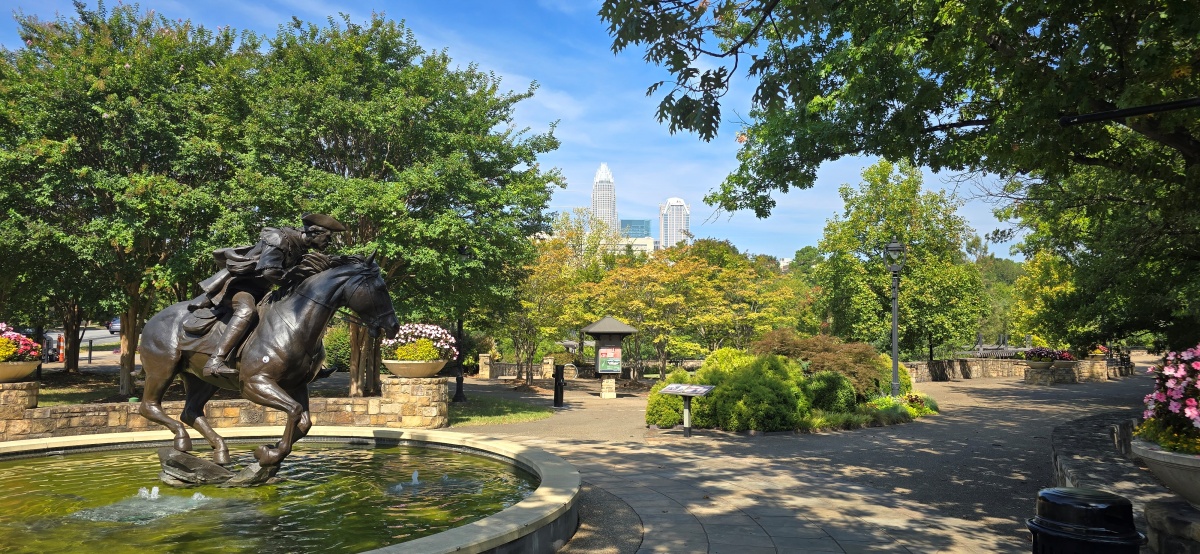
James Jack carried the Mecklenburg Resolves — a.k.a. the Meck Dec — to North Carolina delegates in Philadelphia in 1775.
James Jack • Messenger • The Spirit of Mecklenburg statue • Little Sugar Creek Greenway, Charlotte, NC
Jack is remembered for riding the Mecklenburg Resolves to the Continental Congress in 1775 — an act of early revolutionary defiance from North Carolina. Details remain debated, but his story represents the grassroots political energy that preceded the formal declaration of independence.
Black Soldiers — Free and Enslaved
Isaac Hammond • Soldier • Fayetteville, NC
A free Black barber from Fayetteville, Hammond served as a fifer in the 10th North Carolina Regiment — including the winter at Valley Forge. After the war, he continued serving in the Fayetteville Independent Light Infantry despite restrictions on Black militia service. A life of military dedication that lasted long after the Revolution ended.
Edward “Ned” Griffin • Soldier • Guilford Courthouse, NC
Forced into service through a contested agreement, Griffin fought at Guilford Courthouse and throughout the war. His freedom was initially denied after service. The North Carolina General Assembly granted it in 1784 in formal recognition of what he had done.
Isaac Carter & the Harlowe Patriots • Soldier • Craven County, NC · Fort Hancock
Carter was one of the Harlowe Patriots — free Black soldiers from coastal North Carolina who served in the 10th Regiment and at Fort Hancock. After the war, Carter returned to Craven County as a free man. Their contributions were long overlooked; recognition is still catching up to the record.
John Chavis • Educator • Raleigh, NC
Chavis served in the 5th Virginia Regiment before becoming one of the most educated Black men of his era. After the war he became a minister and educator in North Carolina, opening one of the earliest integrated schools in Raleigh and advising state leaders throughout his life. His story begins on a battlefield and ends in a classroom.
Women of the Revolutionary Carolinas
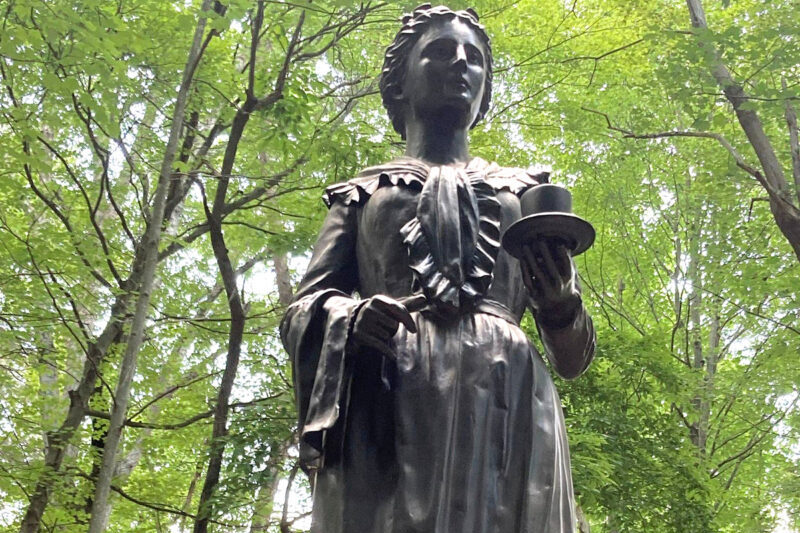
Statue honoring Kerenhappuch Norman Turner at Guilford Courthouse Battlefield, NC
Betsy Dowdy • Women • Currituck Banks, NC
Remembered for riding from Currituck Banks through the night to warn Patriot forces of advancing Loyalists. The ride itself has become legendary — a story of speed, courage, and a young woman acting on her own judgment when the stakes were as high as they could be.
Margaret Kate Moore Barry • Women • Cowpens Area, SC
Known as the Heroine of the Battle of Cowpens, she rode the backcountry to rally militia forces and guide Gen. Daniel Morgan. Her knowledge of the region helped move men and information where they were needed most.
Elizabeth Maxwell Steele • Women • Salisbury, NC
Associated with providing General Nathanael Greene with lodging and supplies in Salisbury during the Southern Campaign. In a war of logistics as much as battles, this kind of support kept armies moving.
Mary Slocumb • Women • Moore's Creek Bridge, NC
Linked by legend to tending wounded soldiers at Moore's Creek Bridge. Whether every detail holds up to scrutiny, the role she represents — the civilian caretaker in the immediate aftermath of battle — was real and widespread.
Kerenhappuch Norman Turner • Women • Guilford Courthouse Battlefield, NC · Statue on grounds
Traveled from Maryland to Guilford Courthouse after her son was wounded. A statue on the battlefield commemorates her story and, in doing so, honors the broader experience of women who moved toward the war rather than away from it. Find this statue before you leave the battlefield.
Native American Allies — The Catawba and Cherokee Nations
The Catawba Nation • Ally • Currituck Banks, NC
Served as scouts and Patriot allies, fighting against England. Despite having their villages burned in 1780, the Catawba rebuilt and remained in the Carolinas. They are one of the few Native nations to do so.
The Cherokee Nation • British Ally • Western Carolinas and beyond
Faced devastating destruction in 1776 during the Cherokee Campaign, followed by decades of displacement and treaty pressure. Despite this, the Cherokee preserved cultural and political identity, advancing new systems of governance and writing while continuing to resist colonial expansion. Their story in the Revolutionary era is one of survival under conditions designed to prevent it.