
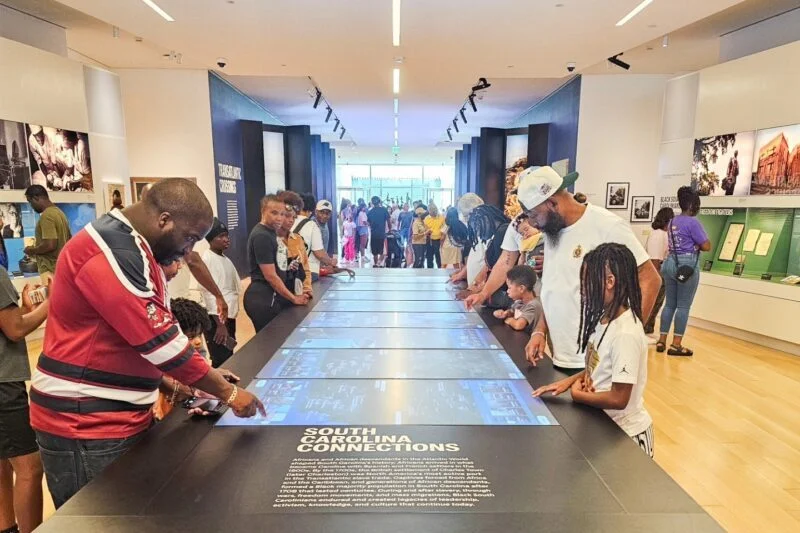
Black History in the Carolinas: Art • History • Culture
February is Black History Month – a time for reflection, remembrance, and respect. It’s a time to honor the generations who built, endured, and redefined the South through courage and creativity. Across the Carolinas, the story of Black history is not only written in books or displayed behind glass; it lives in the soil, in the songs, and in the spirit of communities who have turned struggle into strength. From coastal islands where Gullah Geechee traditions still thrive to city museums preserving the fight for freedom, these places offer powerful ways to remember, to learn, and to bear witness.
- Harvey B. Gantt Center in Charlotte showcases Black art as resistance and community testimony through powerful exhibitions.
- International Civil Rights Center & Museum in Greensboro preserves the sit-in legacy that transformed a national movement.
- Gullah Geechee communities on the coastal sea islands maintain living West African traditions through language, music, and craft.
ART
In Charlotte, the Harvey B. Gantt Center for African-American Arts + Culture stands as both a gallery and a gathering place — a beacon for Black artistry in a region where voices were once silenced. The walls hold not only beauty, but testimony: paintings, photographs, and installations that explore identity, belonging, and the ongoing pursuit of justice. The Gantt Center reminds us that art has always been a form of resistance — a language of both survival and celebration.
Farther south, the International African American Museum in Charleston overlooks the harbor where so many enslaved Africans first set foot on American soil. Its very foundation rests on a sacred place of arrival and loss. Inside, exhibits trace centuries of pain, perseverance, and progress, offering visitors space to grieve, reflect, and honor those whose strength reshaped the world. It is more than a museum — it is a memorial to humanity’s capacity to endure and to create meaning even in the face of unimaginable hardship.
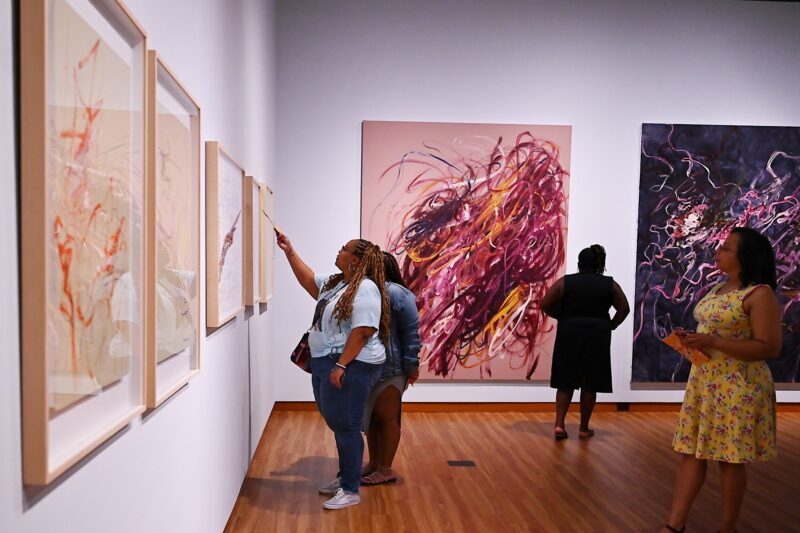
Images courtesy of the Harvey B. Gantt Center for African-American Arts+Culture. Tyrus Ortega Gaines Photography.
HISTORY
In Greensboro, the International Civil Rights Center & Museum preserves one of the pivotal moments of American history. The simple act of four young Black college students sitting at a “whites-only” lunch counter in 1960 became a national turning point. Walking through those doors, seeing the counter, the stools, and the courage that changed a country, visitors feel the weight of both injustice and hope. The museum is a reminder that movements are born from ordinary people who refuse to remain silent.
In Asheville, the Black Cultural Heritage Trail offers a quieter but equally profound experience. Each marker tells the story of families, musicians, business owners, and educators who built thriving communities despite systemic barriers. The trail winds through neighborhoods once divided by segregation and redevelopment, yet still alive with memory. To walk this path is to honor those who made a way where there seemed to be none.
CULTURE
Along the coastal plains and sea islands, the Gullah Geechee people preserve a living connection to West Africa — one of the most direct in the United States. Descendants of enslaved Africans who toiled on Carolina rice plantations, the Gullah Geechee maintained their language, faith, and cultural identity through centuries of oppression. Their songs, crafts, and stories carry both sorrow and joy — the unbroken threads of a people who refused to be erased. Visiting these communities is not tourism; it’s a pilgrimage of respect.
Today, Black culture in the Carolinas continues to grow and shape the region’s identity — from gospel choirs and jazz clubs to local artists reclaiming space through murals, storytelling, and public art. These expressions aren’t just performances; they’re affirmations of presence, power, and pride. They remind us that the story of the South cannot be told without the voices of the people who built it, sustained it, and continue to transform it.
Honoring the Past, Embracing the Future
Black History Month is not simply a celebration — it’s a call to remembrance, a space to reckon with the pain of the past while honoring the resilience that still guides the Carolinas forward. When you step into these museums, walk these trails, or listen to the rhythms of Gullah song, you are not an observer — you are a witness. The stories of Black Americans in the South are stories of struggle, yes, but also of brilliance, survival, and hope.
As you travel this February — and throughout the year — may these places inspire reflection and gratitude. The history they hold is not just African American history. It is the story of America itself — one written in courage, carved in endurance, and carried forward in every act of remembrance.